Kelowna's Residential Climate Control Masters
Is It Time to Replace Your Furnace? Signs Your Heating System Is on Its Last Legs
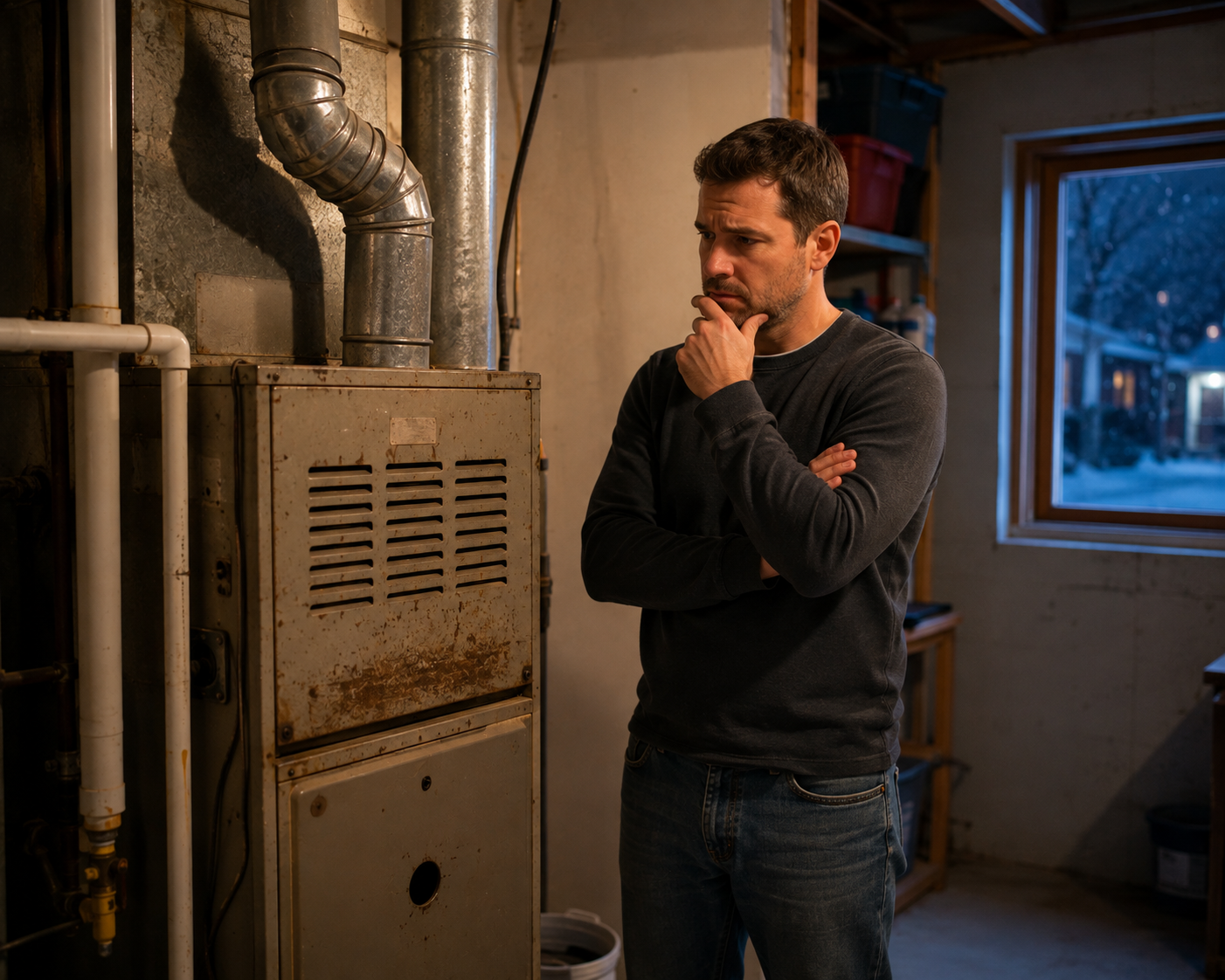
No one wants to replace their furnace. It's a significant investment, it's not something you can see or show off, and as long as the house is warm, it's easy to put off. But a furnace that's struggling doesn't just cost you money in repairs and energy bills — it can leave you without heat on the coldest nights of the year, when getting a new system installed quickly is both difficult and expensive.
November is when Okanagan homeowners start relying on their heating system in earnest. It's also the month when aging furnaces that held on through a mild fall start to show their true condition. If your system has been giving you signals, this is the time to pay attention to them.
Age: The Starting Point
The first question to ask is simple: how old is your furnace?
Most gas furnaces have a service life of 15 to 20 years with proper maintenance. A well-maintained system at the lower end of that range might have several good years left. A system that's been neglected, or one that's pushing 20 years, is living on borrowed time regardless of how it seems to be running today.
If you're not sure how old your furnace is, check the data plate on the unit — it usually includes the manufacture date. Alternatively, a technician can identify the age from the serial number.
Knowing the age gives you important context for every other sign on this list. A repair that makes sense on a seven-year-old furnace rarely makes sense on a seventeen-year-old one.
Increasing Repair Frequency
One repair in a heating season is normal. Two or three repairs in a few years is a pattern worth paying attention to.
As furnaces age, components wear out. When one part fails, others that have experienced the same wear are often not far behind. Each repair on an aging system buys a little more time — but the intervals between repairs tend to get shorter, and the costs tend to get higher.
A useful way to think about it: if a repair costs more than half the price of a new system, and your furnace is over 15 years old, replacement is almost always the better financial decision. You're spending significant money to extend the life of a system that will need replacing in the near future regardless.
Rising Energy Bills
A furnace that's losing efficiency costs more to run — even if it's still heating your home adequately. As heat exchangers crack, burners get dirty, and components wear, the system has to work harder and run longer to produce the same amount of heat.
If your heating bills have been climbing over the past few winters without a corresponding change in your usage or energy rates, that's a signal worth investigating. An efficiency drop of 10–15% on an older system is not unusual — and at current gas prices, that difference adds up over a full heating season.
New high-efficiency furnaces operate at 95–98% AFUE (Annual Fuel Utilization Efficiency), meaning nearly all of the gas they consume is converted to heat. An older standard-efficiency furnace might be operating at 70–80% — or lower if it's been poorly maintained. The monthly savings from a more efficient system are real and should factor into any replacement decision.
Uneven Heating Throughout the House
If some rooms in your home are noticeably colder than others, or if certain areas take much longer to warm up, it may be a sign that your furnace is no longer distributing heat effectively.
Uneven heating can have several causes — blocked vents, duct issues, or an improperly sized system — but an aging blower motor or a heat exchanger that's compromised can also be responsible. If you've already ruled out simple causes like blocked vents and dirty filters, and the problem persists, it's worth having a technician assess whether the furnace itself is the issue.
Strange Noises
Furnaces make noise — that's normal. But certain sounds are worth taking seriously:
- Banging or popping on startup can indicate delayed ignition, where gas builds up before igniting. This puts stress on the heat exchanger over time and is a sign the burners need attention.
- Rattling or vibrating can point to loose components, a failing blower motor, or ductwork issues.
- Screeching or squealing usually indicates a problem with the blower motor or belt — something that needs attention before it leads to a full failure.
- Repeated clicking without ignition suggests an ignition system problem.
Any of these sounds on an older furnace should prompt a service call. On a newer furnace, they're likely repairable. On a system that's 15+ years old, they're often a sign that the system is near the end of its reliable life.
Yellow or Flickering Burner Flame
If you can see your furnace's burner flame, it should be a steady blue. A yellow or orange flame, or one that flickers or wavers, indicates incomplete combustion — which produces carbon monoxide.
This is a safety issue, not just a performance issue. If you notice a yellow flame, turn the furnace off and call a technician. It may be something as simple as dirty burners that need cleaning, or it may point to a more serious problem with the heat exchanger or venting.
The Repair vs. Replace Decision
There's no single formula that makes this decision for you, but a few questions help frame it:
How old is the system? A furnace under 10 years old is generally worth repairing. One over 15 years old should be evaluated carefully before putting money into it.
What's the repair cost relative to replacement? The general guideline is: if the repair cost exceeds 50% of what a new system would cost, and the furnace is more than halfway through its expected lifespan, replacement is usually the better investment.
How has efficiency changed? If your bills have been rising and comfort has been declining, you're already paying the cost of an aging system every month. A new high-efficiency furnace often pays for part of itself through energy savings.
What's the risk of waiting? If your furnace is showing multiple signs of wear and you're heading into the coldest months of the year, the risk of a mid-winter failure is real. Replacing a struggling furnace in November on your schedule is far less disruptive than an emergency replacement in January.
If Replacement Is the Right Call
A furnace replacement is a significant decision, and there's no shortage of options — different efficiency ratings, different sizes, and different features. Getting it right matters. An undersized system won't keep up on the coldest days; an oversized one will cycle on and off too frequently, reducing comfort and efficiency.
A properly done installation includes a load calculation to determine the right size for your home, proper venting and gas line connections, and commissioning to confirm everything is operating correctly. It's not a job where cutting corners pays off.
Macdonald Mechanical installs furnaces from leading manufacturers and can help you choose the right system for your home and budget. We'll walk you through your options honestly — including whether repair might actually be the right call for your situation.
Don't Wait Until It Fails
The worst time to replace a furnace is when it's already stopped working on a cold night. Parts may need to be ordered, installation takes time, and you're making a rushed decision on a major purchase under pressure.
If your furnace is showing any of the signs above, the best time to have it assessed is now — before you're relying on it through the coldest part of the year. A service call in November gives you options. A failure in January gives you urgency.
Contact us today at (250) 681-2600 or Macdonald.Mechanical.Inc@gmail.com.