Kelowna's Residential Climate Control Masters
What to Do When Your AC Stops Working on the Hottest Day of the Year
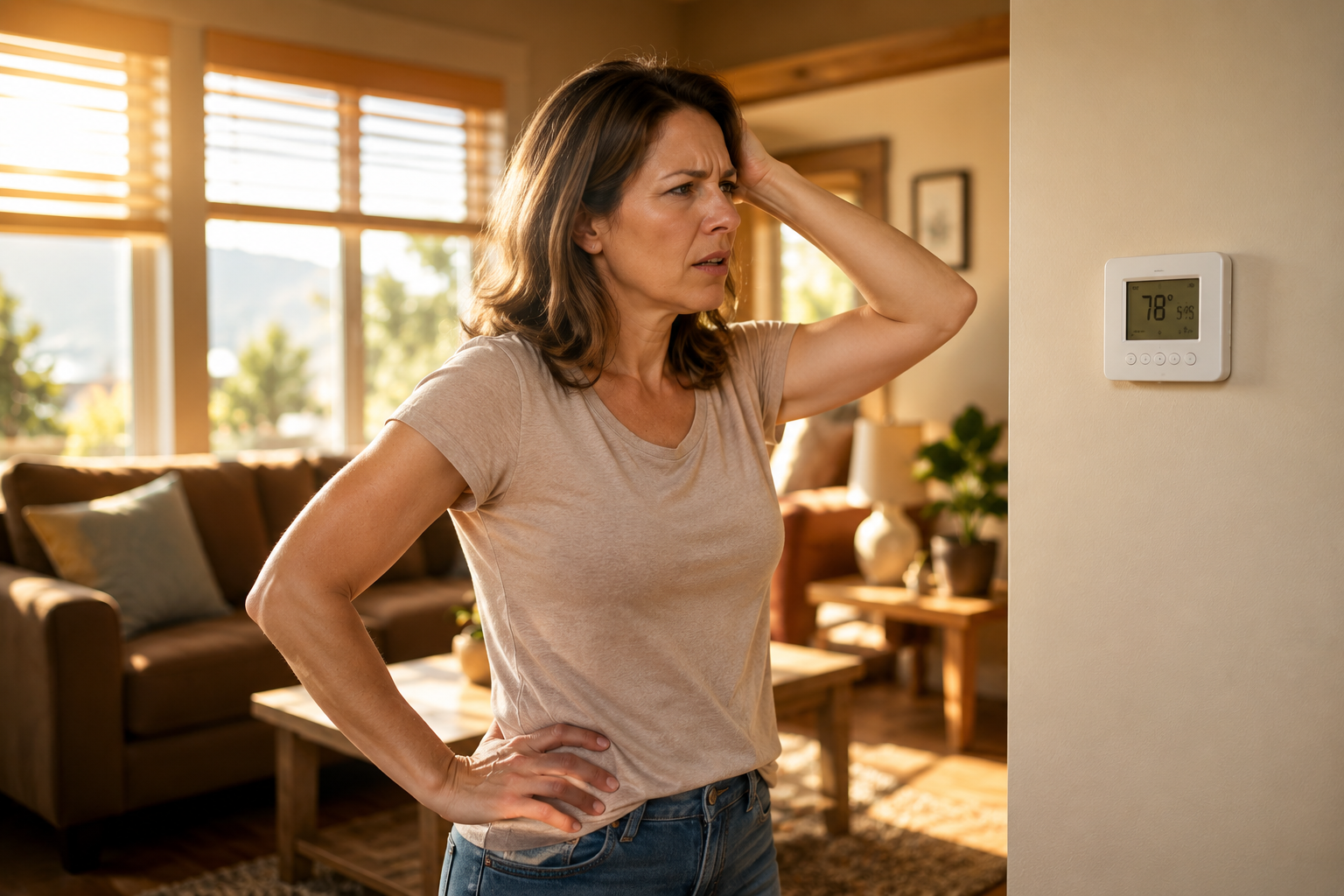
It never happens in April. It never happens on a mild Tuesday in June. It happens at 4 PM on the hottest day of the year, when it's 38°C outside and your house is already warming up fast.
If your air conditioner has just stopped working, here's what to do — starting with the checks you can handle yourself, and ending with when it's time to pick up the phone.
Step 1: Check the Obvious Before You Call Anyone
A surprising number of AC "failures" turn out to be something simple. Before assuming the worst, work through this list:
Check your thermostat
Make sure it's set to COOL, not FAN or HEAT. It sounds basic, but it's one of the most common calls we get. Also check that your setpoint is actually lower than the current room temperature — if someone nudged it up, the system won't run. If your thermostat runs on batteries, swap them out.
Check the breaker panel
Air conditioners draw a lot of power, especially during a heat wave when they're running almost continuously. A tripped breaker is a common cause of sudden shutdowns. Find the breaker labeled for your AC or air handler, flip it fully off, then back on. If it trips again immediately, stop — that's a sign of an electrical issue that needs a technician.
Check your air filter
A heavily clogged filter can cause your system to overheat and shut itself off as a protective measure. Pull it out and hold it up to the light — if you can't see through it, it's overdue for a change. Replace it, then give your system 30 minutes before trying to restart.
Check your vents
Walk through your home and make sure supply and return vents are open and unobstructed. Closed or blocked vents create pressure imbalances that can cause the system to shut down or freeze up.
Check the outdoor unit
Go outside and look at your condenser unit. Is it running? Is it making unusual noises? Check whether the area around it has become overgrown — shrubs or debris blocking airflow will cause the unit to overheat. If you can safely do so, rinse the fins gently with a garden hose to clear any dust buildup (common in dry Okanagan summers).
Look for ice
If your indoor air handler or the refrigerant lines running to your outdoor unit are covered in ice, your system has frozen up. This typically happens from restricted airflow (dirty filter or blocked vents) or low refrigerant. Turn the system off and set the fan to ON only — not COOL — to let it thaw. This can take a few hours. Once thawed, replace the filter and try again. If it freezes again, it's time to call.
Common Reasons AC Systems Fail in Summer
If the basic checks didn't solve it, the issue is likely one of these:
Refrigerant leak
Low refrigerant is one of the most common causes of AC failure in summer. Without enough refrigerant, your system can't transfer heat effectively and will either blow warm air or freeze up entirely. This requires a licensed technician — refrigerant can't be added without finding and fixing the leak first.
Capacitor failure
Capacitors are the components that help start and run your compressor and fan motors. They take a beating during hot weather when the system runs hard for extended periods. A failed capacitor often causes the outdoor unit to stop running while the indoor fan continues — you'll notice air blowing but not cooling. This is a relatively quick and affordable repair.
Compressor failure
The compressor is the heart of your AC system. If it fails, the system can't cool at all. Compressor failures are more common in older systems or in units that have been running in stressed conditions (dirty coils, low refrigerant, electrical issues) over time. This is a significant repair — and in older units, it often triggers the conversation about replacement.
Dirty or frozen evaporator coils
Over time, evaporator coils accumulate dust and grime that insulates them and reduces their ability to absorb heat. Heavily fouled coils can also freeze. Coil cleaning is part of a proper seasonal tune-up — another reason skipping annual maintenance catches up with homeowners in summer.
Electrical issues
Heat causes wiring, contactors, and other electrical components to degrade faster. Failed contactors, burnt wiring, or tripped safety switches can all shut down a system without warning.
When to Call a Technician
Call a technician if:
- The breaker trips repeatedly after being reset
- The system is running but only blowing warm air
- The outdoor unit isn't running at all
- You see or hear anything unusual — burning smells, loud grinding or banging, visible ice that won't clear after thawing
- The system short cycles (turns on and off rapidly)
- You've worked through all the basic checks and nothing has helped
Don't wait on these. In peak summer, HVAC technicians book up quickly. The sooner you call, the sooner you get on the schedule.
How to Stay Cool While You Wait
If you're waiting for a service appointment in Okanagan heat, a few things help:
- Close blinds and curtains on all sun-facing windows to block radiant heat
- Use ceiling fans — they won't cool the air, but the wind chill effect makes a real difference
- Avoid using the oven — cooking adds significant heat to your home; use the BBQ or microwave instead
- Move to the lowest level of your home — heat rises, so basements and main floors stay cooler longer
- Use a portable AC or fan in one room and keep the door closed to concentrate the cool air
If you have young children, elderly family members, or anyone with a medical condition affected by heat, consider spending the day somewhere air conditioned — a mall, library, or a friend's home — while you wait for service.
A Note on Prevention
The reason so many AC systems fail in July isn't bad luck — it's deferred maintenance. A system that hasn't been serviced in two or three years is running with dirty coils, worn components, and reduced refrigerant — all of which become critical failures when it's pushed hard during a heat wave.
A spring tune-up catches these issues before summer arrives, when repairs are less urgent and wait times are shorter. It's the single best thing you can do to avoid the call no one wants to make at 4 PM in July.
Need Help Now?
If your AC has stopped working and the basic troubleshooting steps haven't helped, give us a call. Macdonald Mechanical provides residential HVAC service throughout the Okanagan, and we'll get you on the schedule as quickly as possible.
Contact us today at (250) 681-2600 or Macdonald.Mechanical.Inc@gmail.com.